
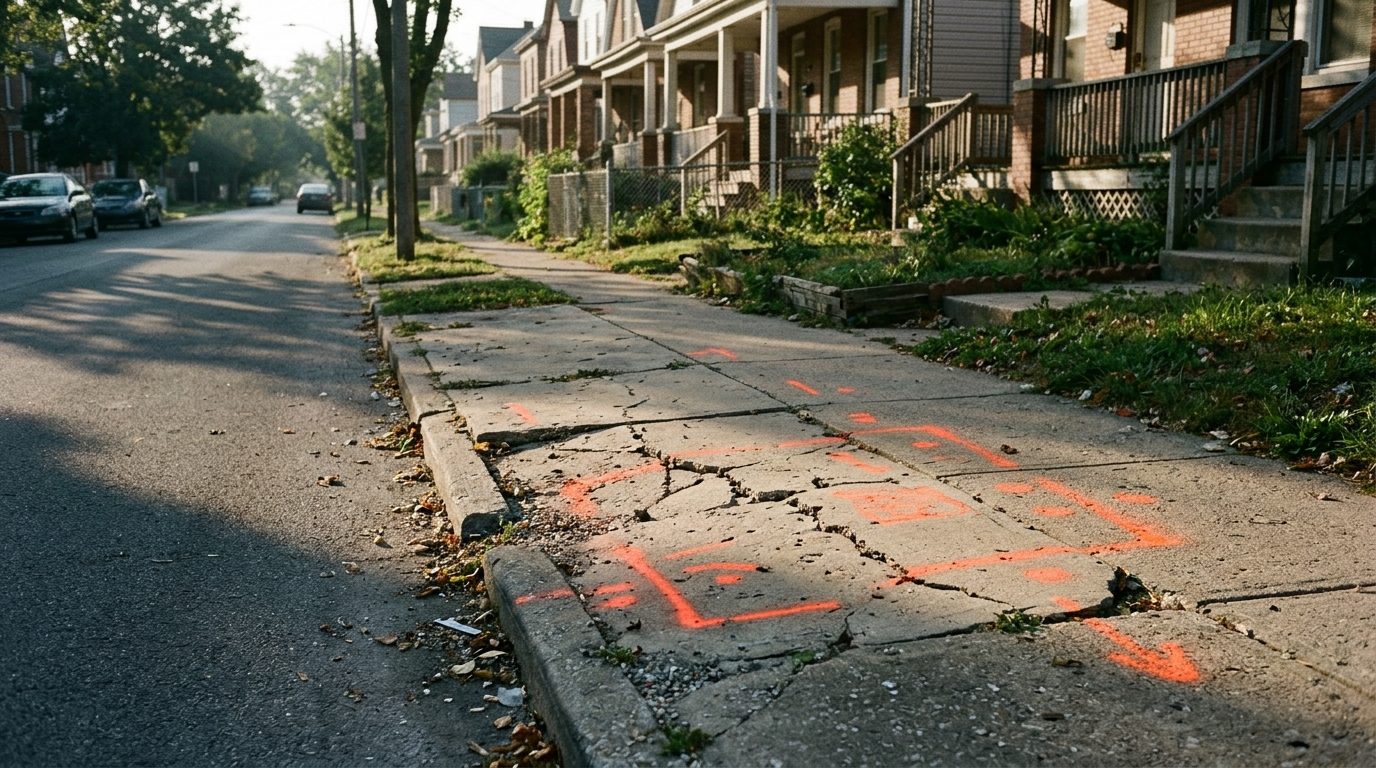
Sidewalks feel public. You don’t own the one in front of the café, and the city plows the road beside it. So it surprises many people to learn that in a lot of US cities, the job of fixing a broken sidewalk falls on the owner of the property next to it.
There is no single national rule. The answer to who repairs broken sidewalks depends on state law, your city’s code and sometimes on what caused the damage. This guide explains the common arrangements and how to find out which applies where you are.
The short answer: it depends on where you live
Across the US, sidewalk responsibility generally follows one of three patterns:
- The adjacent property owner is responsible. The city owns the sidewalk or the right-of-way, but local law requires the neighboring property owner to keep it in good repair, and sometimes to pay if the city does the work.
- The city is responsible. The city inspects, repairs and pays for sidewalks, usually through a public works program.
- A mix of both. The owner is responsible in general, but the city covers certain causes, such as damage from city-owned street trees, or offers programs that share the cost.
Example: New York City
New York City is a clear example of the property-owner model. According to the city’s Department of Transportation, property owners are responsible for installing, repairing and maintaining the sidewalks next to their properties under Section 19-152 of the city’s Administrative Code, and they can be held liable for injuries caused by failing to keep the sidewalk free of defects under Section 7-210 (NYC DOT).
The same page explains how the process works there:
- DOT inspects sidewalks and can issue a Notice of Sidewalk Violation to the owner when it finds a defect. The notice carries no fine.
- The owner has 75 days to make the repair. If they don’t, the city may do the work and the Department of Finance bills the owner.
- Tree damage is treated differently. NYC does not charge owners of one-, two- and three-family homes for repairing sidewalk damage caused by a city tree, and the Parks Department runs a separate repair program for tree-root damage.
- Utility damage is the responsibility of the company that caused it; owners are told to document the damage and contact that company.
Anyone can report a broken sidewalk in New York through NYC 311, which leads to a DOT inspection.
Example: Los Angeles
Los Angeles shows how a city’s approach can change over time. In 2016, after a lawsuit by residents, the city agreed to a 30-year, $1.4 billion commitment to repair sidewalks, and launched a program called Safe Sidewalks LA to make sidewalks comply with the Americans with Disabilities Act and California’s building code (Western City Magazine, written by the city’s engineer in 2018).
The program set up different ways to request a repair, including a priority track for people with mobility disabilities. The same article notes that cities across California have various policies, many of which require individual property owners to maintain the sidewalks serving their properties. Programs like this change, so check the city’s current rules before relying on any detail.
How to find out who is responsible where you live
- Search your city’s website for “sidewalk repair” or “sidewalk maintenance.” Many cities have a page that states the rule plainly.
- Check the municipal code. Most cities publish their code online; look for a section on sidewalks, streets or public works.
- Ask through your city’s service line. Calling or submitting a request through 311 or public works is often the quickest way to get a direct answer.
- Look for special programs. Some cities offer cost-sharing, rebates, or free repairs for certain causes such as tree roots, or for certain owners.
- Notice who caused the damage. Damage from a utility dig or a contractor may be the responsibility of the company that did the work.
If you’re a pedestrian, not an owner
You don’t need to know who is legally responsible to report a problem. Report the hazard to your city and let it route the request. Our guide on how to report a street hazard shows you how, and our guide to sidewalk trip hazards explains what to look for.
If a broken sidewalk blocks access for people with disabilities, the city’s ADA Coordinator is another contact. Our guide to common sidewalk barriers for wheelchair users covers this.
If you’re a property owner
If your city places sidewalk responsibility on owners, it’s usually worth acting before a small crack becomes a cited defect. Check your city’s rules on permits and approved contractors before any work starts; New York, for example, requires a permit for sidewalk repairs (NYC DOT). If you’ve been injured or are facing a claim, speak to a qualified attorney about your situation; this guide can’t tell you how the law applies to you.
Sources
- NYC Department of Transportation, Sidewalks
- NYC 311, Broken Sidewalk
- Western City Magazine, Los Angeles Launches a $1.4 Billion Sidewalk Repair Program (2018)
This guide is general information, not legal, medical or engineering advice. Rules and processes differ by city and state. In an emergency, call 911.