
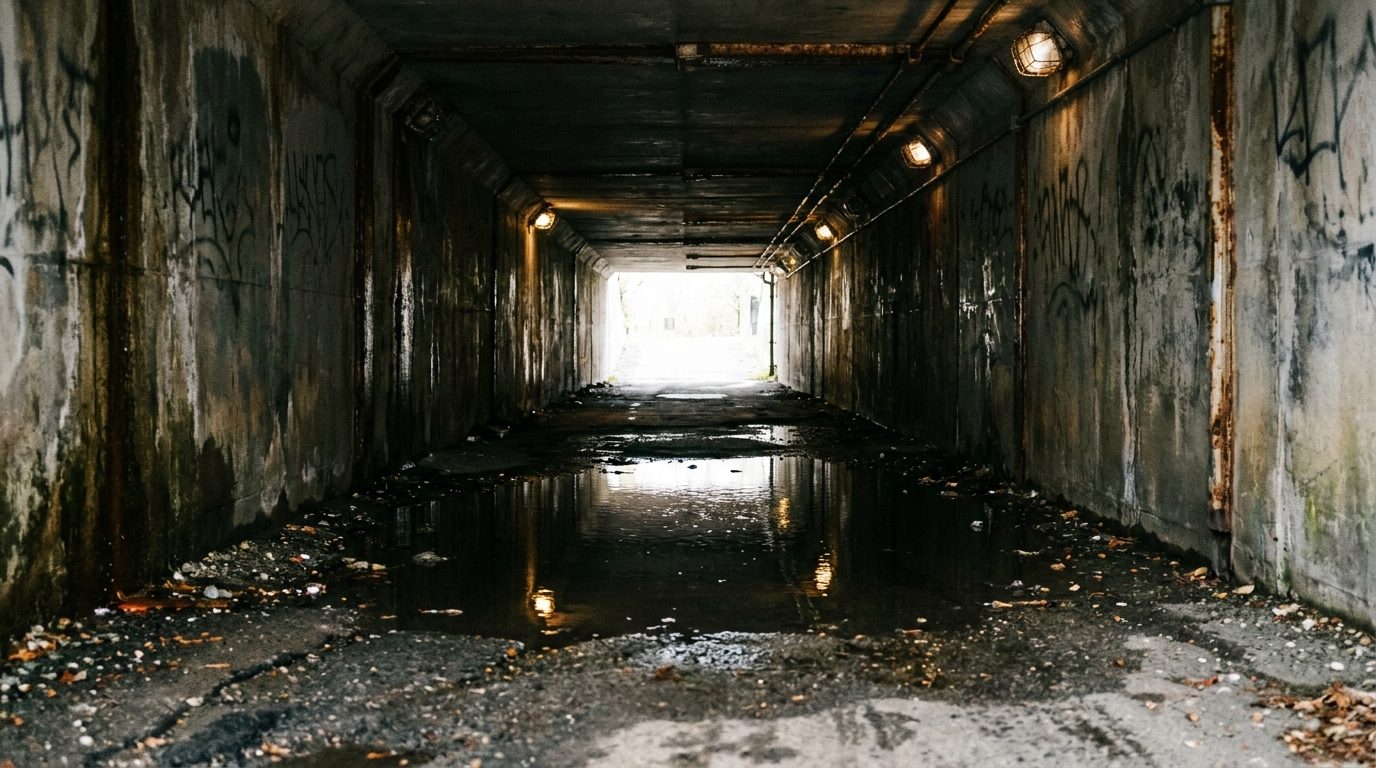
Some poorly designed public spaces look impressive in a photo and are awkward or risky to actually use: steps that blend into the paving, an underpass that floods, a plaza that turns slick in the rain. The problem usually isn’t one broken thing. It’s design choices that make the space harder to use safely.
This guide covers common warning signs of poorly designed public spaces, why they matter, and how to raise them with the people responsible.
Warning signs
Steps and level changes you can’t see
Steps in the same color and material as the surrounding paving, with no contrasting edge or handrail, are easy to miss, especially when you’re looking ahead or the light is low. A single unexpected step can be worse than a full staircase, because nothing warns you it’s there.
Surfaces that turn slippery
Polished stone, smooth tile and some metal plates look good dry and become slick when wet. Federal accessibility guidelines for public sidewalks and crossings call for walking surfaces that are stable, firm and slip resistant (US Access Board, R302.6). A plaza that doesn’t meet that standard in the rain is worth reporting.
Gaps, grates and openings
Decorative grates, drainage channels and joints with wide openings can catch heels, cane tips and wheels. The same guidelines call for openings that won’t let a 1/2-inch ball pass through, with long slots set across the direction of travel (US Access Board, R302.6.3).
Dark corners and underpasses
Underpasses, tunnels and plazas with little lighting feel unsafe and hide hazards on the ground. The Federal Highway Administration notes that adequate lighting benefits personal security for people walking, using wheelchairs, cycling and waiting for transit (FHWA). Our guide on why street lighting matters explains more.
Water that has nowhere to go
Low points that collect water create puddles that block a path entirely, and in cold weather, ice. A walkway that floods every time it rains is a design problem, not just a maintenance one.
Routes that only work for some people
Spaces where the only way in is a flight of stairs, where the step-free route is long and unsigned, or where a curb ramp leads to a dead end leave people using wheelchairs, walkers or strollers stuck. Our guide to common sidewalk barriers for wheelchair users covers these.
Clutter in the walking path
Planters, bollards, benches, signs and art placed in the natural line of travel force people to weave around them. That’s harder for people with low vision and anyone pushing a stroller or using a mobility device.
Why design matters more than maintenance
A cracked slab can be fixed in a day. A plaza with invisible steps or a drain in the wrong place will keep causing problems until it’s redesigned. That’s why reports about public spaces are most useful when they describe the pattern (“people regularly miss this step at night”) rather than a single event.
How to raise it
- Find out who manages the space. It might be the city, a parks department, a transit agency or a private owner that allows public access.
- Describe the problem and when it happens: in the rain, at night, for wheelchair users.
- Add photos taken from a safe spot.
- Report it through your city’s 311 or the managing agency. For accessibility barriers, the city’s ADA Coordinator is another contact.
Our step-by-step guide on how to report a street hazard explains each step.
Related guides
- How to report a street hazard to your city, step by step
- Common sidewalk barriers for wheelchair users and how to report them
- Why street lighting matters for pedestrian safety
Sources
- US Access Board, Public Right-of-Way Accessibility Guidelines, Chapter 3 (section R302.6, Surfaces)
- Federal Highway Administration, Proven Safety Countermeasures: Lighting
This guide is general information, not legal, medical or engineering advice. Rules and processes differ by city and state. In an emergency, call 911.