
Potholes don’t fix themselves, and crews can’t patch what they don’t know about. Many cities say outright that they rely on residents to tell them where potholes are. Knowing how to report a pothole well, and what to expect afterwards, makes it more likely the hole in your street gets filled, and filled properly.
Why potholes appear
In cold climates, the main culprit is the freeze and thaw cycle. Minneapolis Public Works explains that water gets into cracks in the road, freezes, expands and moves the paving material, which breaks it apart into potholes. A winter that swings above and below freezing tends to produce more potholes by spring (City of Minneapolis).
Heavy traffic, aging pavement and poor drainage add to the problem in warmer places too.
Step 1: Work out whose road it is
Most potholes are on city streets and go to the city. But some roads that run through town belong to the state, and state transportation departments often have their own reporting lines or online forms. If you’re on a numbered highway or a major through-route, check your state DOT’s website as well as your city’s.
Step 2: Report it
Most cities accept pothole reports by phone, online form or app. Where it exists, 311 is often the easiest route. Minneapolis, for example, takes pothole reports by phone, email, its 311 app and its website (City of Minneapolis).
A useful report includes:
- The exact location: street, nearest address or cross street, and the direction of travel.
- Which lane the pothole is in, and whether it’s near the curb, the center line or a crosswalk.
- How big and deep it looks, roughly, and whether it’s growing.
- A photo, but only if you can take one safely from the sidewalk or a parked position. Never stop in traffic or step into the road.
Our general guide on how to report a street hazard has more tips that apply here too.
What happens after you report
Temporary patches in winter
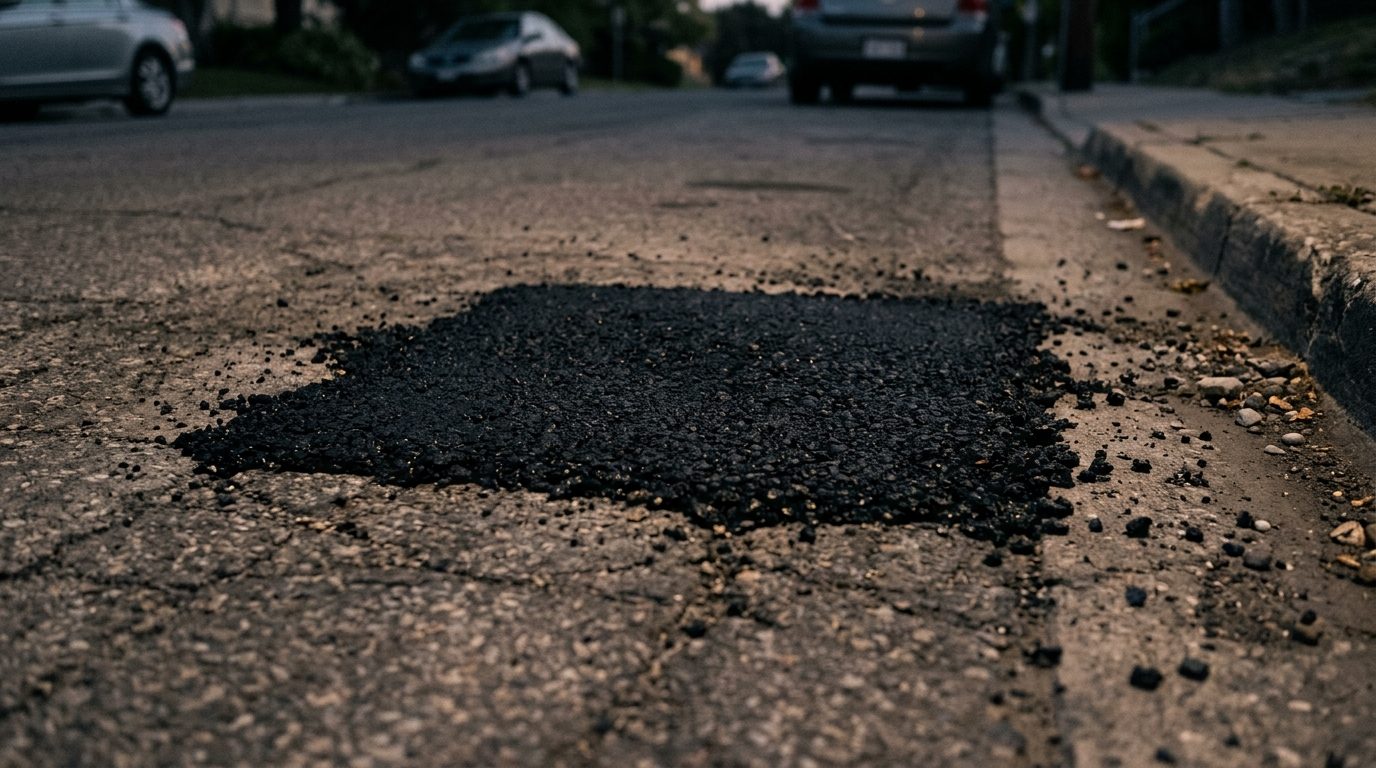
When it’s cold, the asphalt plants that supply road crews are often closed, and hot asphalt cools too quickly to work with. So crews use a “cold mix”: a softer, stickier asphalt that can be packed into a hole even below freezing. Minneapolis notes that this winter mix softens as temperatures rise and has to be replaced later (City of Minneapolis).
That’s why a pothole you reported in February might be patched quickly and then reappear in March. It’s not necessarily a bad repair; it’s a temporary one.
Permanent patches when it warms up
Once the asphalt plants open in spring, crews switch to “hot mix,” the same material used to build new roads. Minneapolis says hot mix patches last anywhere from a year to several years. Its crews also note that a pothole should be dry to patch properly; patches placed in wet holes can pop back out because the material doesn’t stick.
Prevention
Patching is only part of the job. Cities also use crack sealing, seal coating, overlays and full reconstruction to stop potholes forming in the first place, and keeping water out of the pavement is a big part of that (City of Minneapolis). If a street keeps producing potholes, it may be due for one of these larger treatments. Mentioning a repeat problem in your report can help.
If the pothole damaged your car
Many cities have a claims process for property damage, and some mention it right on their pothole pages (City of Minneapolis). Rules, deadlines and outcomes vary widely, so check your city’s website promptly and keep photos, receipts and the date and location. For anything beyond that, a qualified attorney or your insurer can advise you.
First, though, check whether your car needs attention. Our guide on what to check after hitting a pothole walks through it.
Follow up
Save the reference number your city gives you. If the pothole is still there after a reasonable wait, or comes back after a winter patch, report it again and quote that number.
Related guides
- Hit a pothole? How to check your tires, wheels and alignment
- How to report a broken streetlight
- Who is responsible for repairing a broken sidewalk?
Sources
- City of Minneapolis, Pothole repairs and prevention
This guide is general information, not legal, medical or engineering advice. Rules and processes differ by city and state. In an emergency, call 911.