
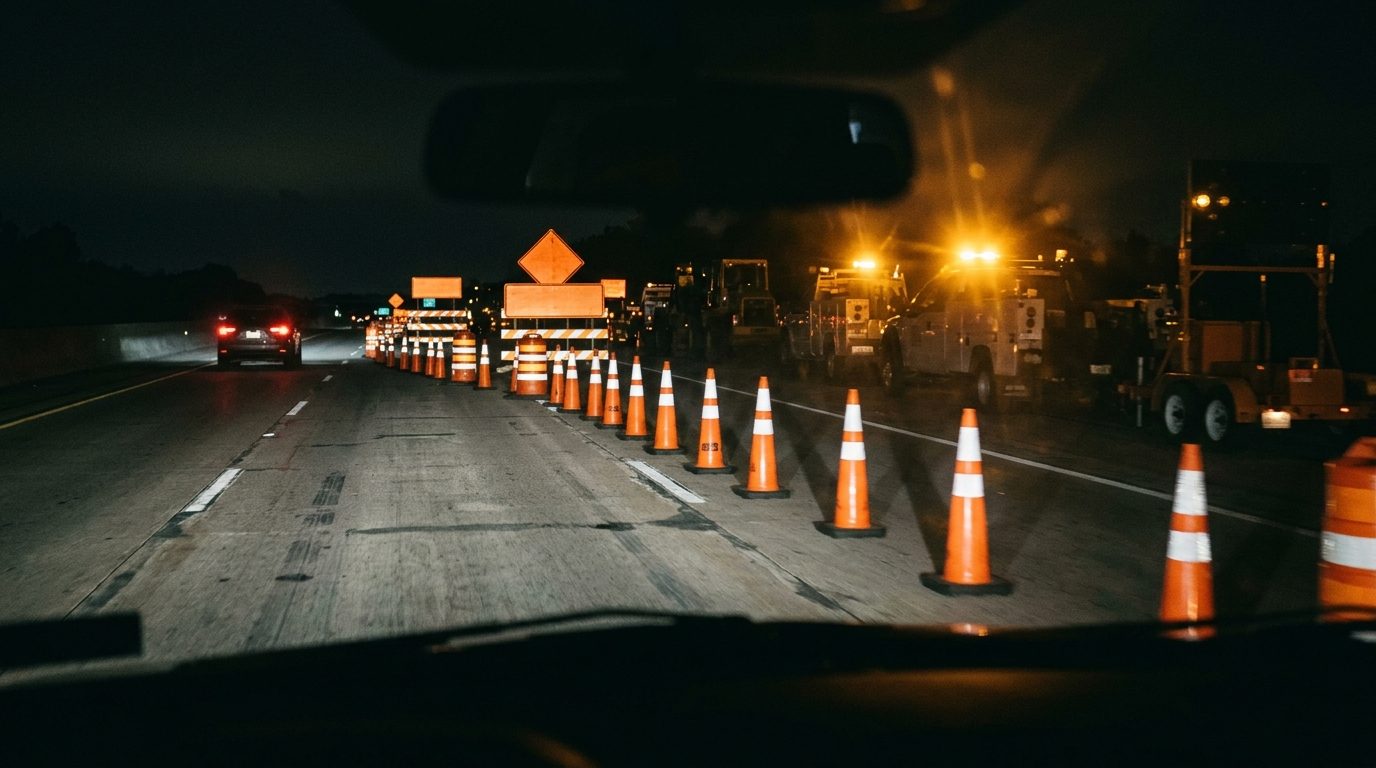
Orange cones, narrowed lanes and sudden stops: road work zones ask drivers to adjust quickly to a road that may not look the same as it did yesterday. Safe work zone driving comes down to a few habits: slowing down, paying attention and leaving room.
This guide draws on the Federal Highway Administration’s advice for drivers to explain how to get through a work zone safely, for your sake and for the workers and pedestrians nearby.
Why work zones need extra care
Federal Highway Administration figures for 2020 show that speed was a factor in more than 37% of fatal work zone crashes, and that about 20% involved a rear-end collision. The same year, 117 highway workers died in work zones, and 170 people on foot and bicycles were killed in work zone crashes (FHWA).
Before you go
Plan ahead. FHWA suggests checking current traffic conditions before you travel. Many state transportation departments and navigation apps show active work zones, which can help you choose another route or allow extra time (FHWA).
In the work zone
FHWA’s driver tips include (FHWA):
- Check your speed. Obey the posted work zone limit, even if no workers are visible. Conditions such as narrow lanes, rough pavement or a sudden drop-off can still be present.
- Leave space. Keep a safe following distance so you can react to sudden stops and slowdowns.
- Minimize distractions. Put the phone away and avoid adjusting settings. Work zone layouts change often, so expect new traffic patterns.
- Watch for workers and people on foot, including pedestrians using temporary detours.
- Be careful around large vehicles. Trucks, buses and construction equipment are slower to respond; don’t cut in front of them.
- Read the signs. Signs, cones, barrels and flaggers are there to guide you through safely.
Understanding lane shifts and merges
Signs ahead of a work zone usually warn you of what’s coming: a lane closing, a shift to the left or right, or a reduced speed limit. When you see a lane-closed warning, merge early and smoothly rather than racing to the last moment, unless signs tell you to use both lanes until the merge point. Follow the cones and pavement markings through shifts, even if old lane lines are still visible underneath.
Flaggers
A flagger is a worker who directs traffic with a sign or flag. Their instructions take priority over normal signals in that spot. Stop when told, wait to be waved through, and proceed slowly.
If you’re walking, not driving
Work zones affect pedestrians too: closed sidewalks, detours and temporary crossings. Our guide on walking safely through a construction zone covers what to expect on foot.
Reporting a problem
If a work zone has missing or confusing signs, a dangerous drop-off, or no safe route for people on foot, report it to the agency responsible for the road, often your city or state transportation department. Our guide on how to report a street hazard explains how.
Related guides
- Walking safely through a construction zone
- Hit a pothole? How to check your tires, wheels and alignment
Sources
- Federal Highway Administration, National Work Zone Awareness Week: Work Zones are a Sign to Slow Down (2022)
This guide is general information, not legal, medical or engineering advice. Rules and processes differ by city and state. In an emergency, call 911.