
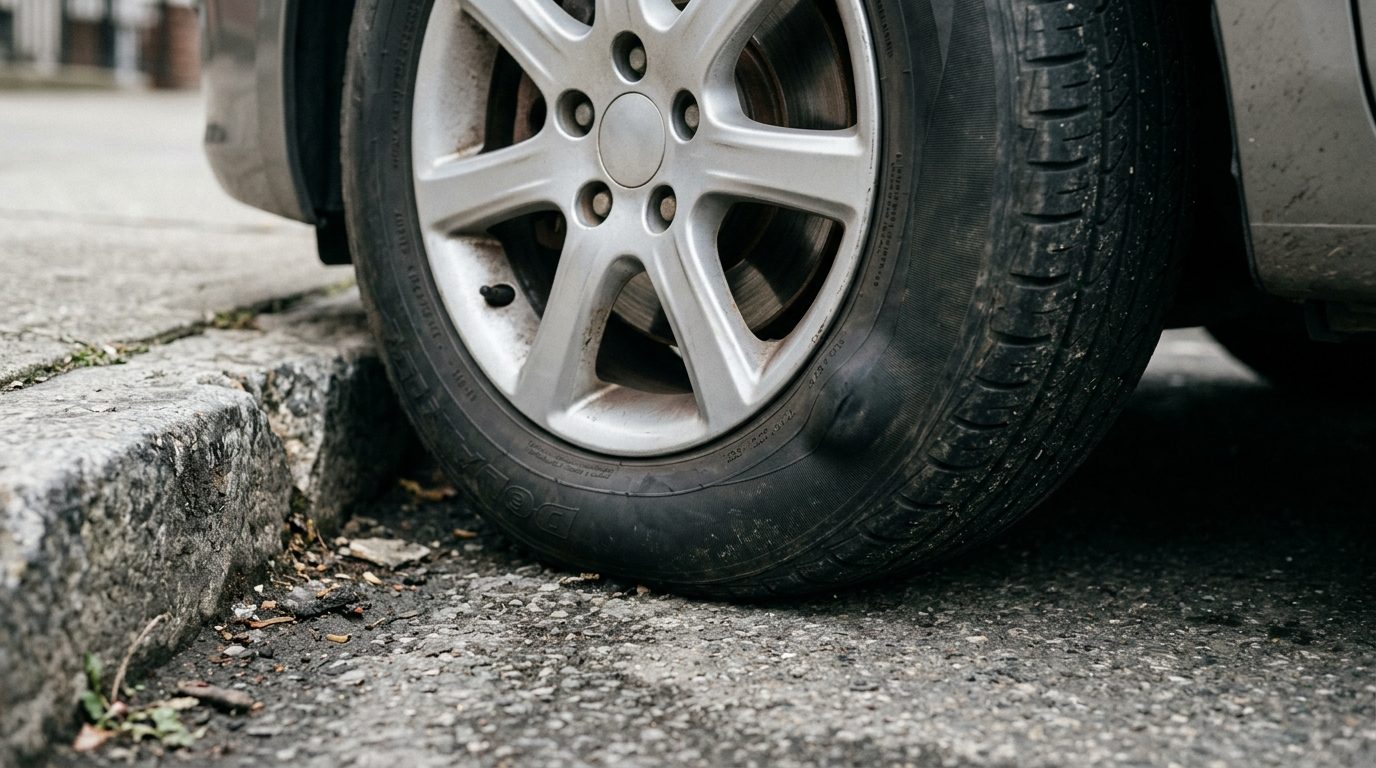
You hear the thud before you feel it. If you hit a pothole hard, it can be harmless, or it can leave damage you won’t notice until it becomes a bigger problem. A few minutes of checking can tell you which.
This guide covers what to look at after a pothole hit and the signs that mean a professional should take a look. It isn’t a substitute for a mechanic’s inspection.
First: get somewhere safe
If the hit was severe, your car pulls hard, a warning light comes on, or you hear new noises, pull over where it’s safe: a parking lot or side street, not the shoulder of a busy road if you can avoid it. If a tire is losing air fast, don’t keep driving on it.
1. Look at the tires
Tires take the brunt of a pothole hit. Consumer Reports notes that potholes, curbs and other road hazards can leave cuts and bulges in tires, and that finding one of these means it’s time to replace the tire (Consumer Reports).
Check each tire, especially the one that took the hit, for:
- Bulges or bubbles on the sidewall (the side of the tire). A bulge usually means internal damage.
- Cuts or gouges, especially deep ones.
- Anything stuck in the tread.
- A tire that looks lower than the others.
A bulge can take a little while to show, so look again over the next few days.
2. Check the pressure
Use a tire gauge when the tires are cold. Compare each reading to the pressure on the sticker inside the driver’s door frame, not the number molded on the tire’s sidewall, which is a maximum rating (Consumer Reports). A tire that keeps losing air after a pothole hit may have a slow leak or a damaged wheel that no longer seals properly.
3. Look at the wheels
Look at the rim of each wheel for dents, bends, cracks or chunks missing from the edge. Even a small bend can cause a slow leak or a vibration. Cracks in a wheel are a reason to stop driving on it until it has been checked.
4. Notice how the car drives
On your next few drives, pay attention to:
- Pulling to one side on a straight, flat road.
- A steering wheel that sits off-center when you’re driving straight.
- New vibration through the steering wheel or seat, especially at certain speeds.
- New noises, such as clunks over bumps or a knocking sound when turning.
These can point to an alignment problem or damage to suspension or steering parts. A mechanic can measure alignment and inspect those parts.
When to see a professional
Have your car checked promptly if you find a bulge or deep cut in a tire, a bent or cracked wheel, a tire that won’t hold pressure, a warning light, or any of the driving changes above. If in doubt, get it looked at; tire and wheel damage can get worse with use.
Prevention and reporting
You can’t avoid every pothole, but you can lower the risk. Keep tires at the right pressure, leave more following distance so you can see the road ahead, and slow down on roads you know are rough. Avoid swerving suddenly into another lane to dodge a pothole.
Then report it. A reported pothole is more likely to be fixed before it damages the next car. Our guide on how to report a pothole explains how, including what to do if you want to file a damage claim with your city.
Related guides
- How to report a pothole and what happens next
- Work zone driving: signs, speed limits and lane shifts explained
Sources
- Consumer Reports, Tire Safety Checklist: What to Do Before a Road Trip
This guide is general information, not legal, medical or engineering advice. Rules and processes differ by city and state. In an emergency, call 911.