
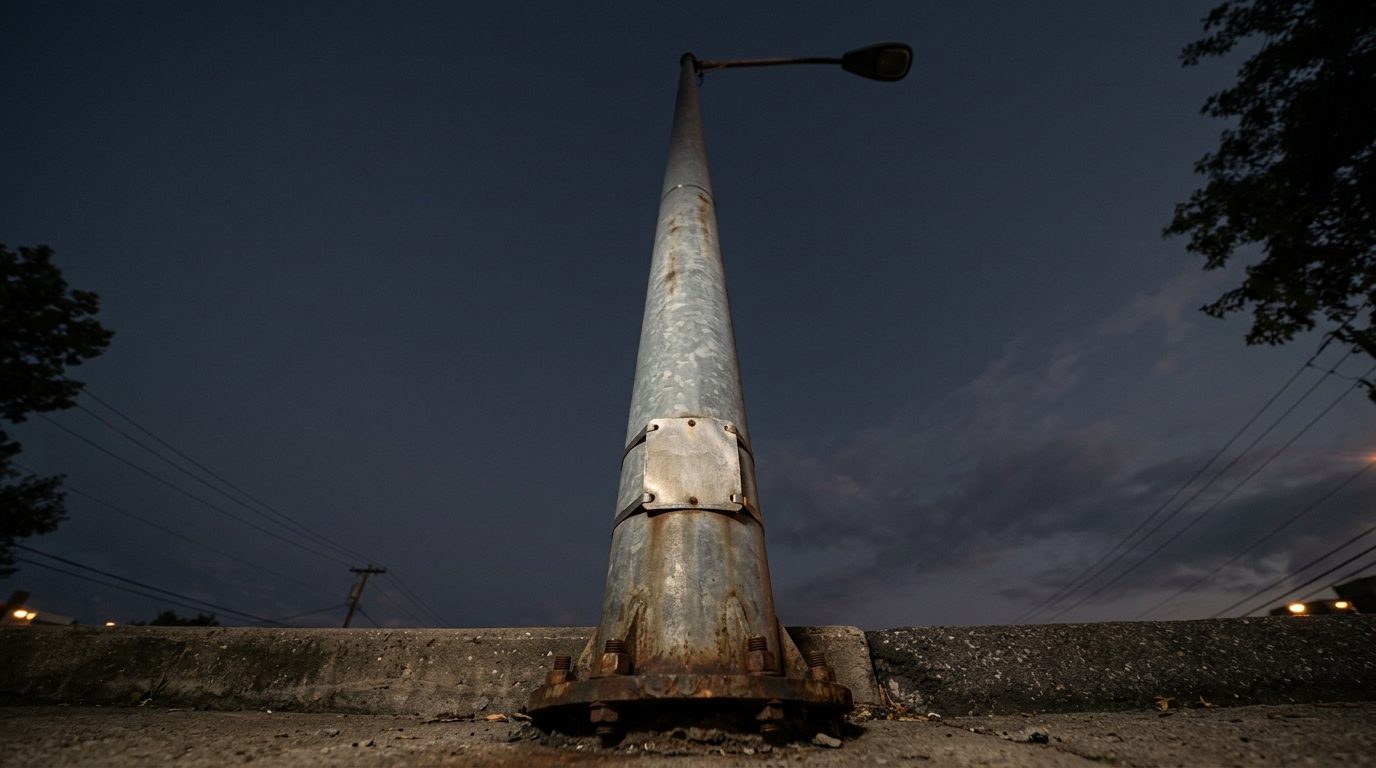
A dead streetlight is easy to ignore, because everyone assumes someone else has reported it. Often no one has. To report a broken streetlight takes a few minutes; the main trick is sending the report to whoever actually owns the light.
Step 1: Work out who owns the light
In many US cities, streetlights belong to more than one organization: some to the city, some to the local power company. South Bend, Indiana, is a good example. Its 311 service explains that both the city and the electric utility own streetlights there, and that you report them in different places (South Bend 311).
South Bend gives a simple way to tell them apart:
- Utility lights are typically on wooden or fiberglass utility poles, with a long, slender arm reaching over the road.
- City lights typically have metal poles, decorative fixtures and no overhead wiring.
Your city may use a different split, but the idea is common. Check your city’s website or 311 page for “streetlight” to see who handles what. If you’re not sure, report it to the city; many will tell you, or pass it on, if the light isn’t theirs.
Step 2: Find the pole number
Many streetlight poles carry a small tag or plate with an ID number, usually around eye level. That number tells the repair crew exactly which light you mean, which matters on a street with dozens of identical poles. Take a photo of it if you can.
Step 3: Describe the problem
South Bend’s 311 asks for details like these, and they’re a good checklist anywhere (South Bend 311):
- The address of the light, or the nearest address and cross street.
- What’s wrong: out, on during the day, cycling on and off, pole down, or wiring exposed.
- The pole material: metal, wood or fiberglass.
- The pole number.
- Any safety hazard it creates, such as a dark crosswalk or bus stop.
Step 4: Report it
Use your city’s 311 line, website or app for city-owned lights. For utility-owned lights, most power companies have a streetlight outage form on their website. Save any reference number you’re given.
What happens next
Response times vary. South Bend, for instance, says that under normal call volume, city staff respond to a city-owned streetlight outage within three business days, though it can take longer when calls are high (South Bend 311). If the light is still out after a reasonable wait, follow up and quote your reference number.
When it’s an emergency
A pole that has fallen, is leaning dangerously, or has exposed wires is not a routine report. Stay well away, keep others back, and call 911 or your power company’s emergency line.
Why it matters
Lighting helps drivers see people on foot, especially at crossings. Our guide on why street lighting matters explains what federal research has found.
Related guides
- Why street lighting matters for pedestrian safety
- How to report a street hazard to your city, step by step
- How to report a pothole and what happens next
Sources
- City of South Bend 311, Street Light Issue
This guide is general information, not legal, medical or engineering advice. Rules and processes differ by city and state. In an emergency, call 911.